Showing posts with label synthesis. Show all posts

Sunday, August 19, 2012

Color and Para Red

In this post I'll talk about a little chemistry regarding color(s) and Synthesis of the Dye Para Red from Aniline

First some info from WIKI:
Para Red (paranitraniline red, Pigment Red 1, C.I. 12070) is a chemical dye. Chemically, the dye is similar to Sudan I. The dye was discovered in 1880 by von Gallois and Ullrich, and was the first azo dye. It dyes cellulose fabrics a brilliant red, but is not very fast. The dye can be washed away easily from cellulose fabrics if not dyed correctly. Throughout making Para Red, the solution will become acidic and basic. Small amounts of byproducts may be left over after the Para Red dye is made that may be acidic or basic, but if made correctly there are little of these and the byproducts have no effect.
In the United Kingdom, the dye is not permitted in food. The UK's Food Standards Agency (FSA) stated that "the Agency’s independent scientific experts have advised that, although there are very limited data available, it would be prudent to assume that it could be a genotoxic carcinogen". [2]
On 21 April 2005, the FSA announced that some batches of Old El Paso dinner kits had been contaminated with the dye, and issued an alert.[2] Also, reported on the 5 May 2005, the dye was found in 35 products which have now been taken off supermarket shelves. The products were mainly cooking sauces, though some are also spices.[3]


At this point I'm going to ask you please please please yo help me out and check out these sites below if you appreciate the help here! 


Procedure
             All procedures were carried out under a hood, all individuals involved wore nitile gloves and safety goggles. Glassware was cleaned, rinsed with deionzed water and if necessary acetone before usage.
            First .7 grams para-Nitroaniline, 15 mL H2O were placed in an Erlenmeyer  flask. The flask was placed onto a hot plate and 3 M HCl was added till everything was completely dissolved. Upon dissolving the solution was cooled in ice water bath (0-5°C) for 10 minutes. Meanwhile a solution of 7 % NaNO2 was prepared by adding .7 grams NaNO2 to 10mL H2O and swirled for 10 minutes with stir bar via the use of the stir function on the hot plate. The heating function was turned off on the hot plate and the solution was kept cool during the period of the stirring.
            Next .7 grams KI were weighed and placed in a beaker. Via the use of a pipette 5.0mL of the cold diazonium salt was added to the KI. The mix was swirled till gas evolution decreased and then ceased. The solid was isolated via vacuum filtration with a Hirsch funnel and washed twice with 1mL portions of cold deizonized water. After filtration the product was isolated and kept for a week allowing it to dry.

            In another 50 mL beaker .25 g b-naphthol and 15mL water were heated till about 60-80°C. Next 10% NaOH was added drop wise will all was dissolved. Meanwhile a notch was cut in the wool portion of the fabric (to help with identification). The fabric was soaked in the solution for about 2 minutes, then removed with forceps and patted dry. The fabric was then placed in the cool diazonium salt.
            Once the fabric was removed the remainder of the b-naphthol was chilled till about 5°C. After cooling the remainders of the 2 solutions were mixed together and via the use of a Buchner funnel underwent vacuum filtration. The collected product was washed thoroughly with water. Once the product was collected it was placed in a beaker and allowed to sit for a week to dry. After the products dried the melting point range was observed and analyzed

For more go here:

https://docs.google.com/viewer?a=v&q=cache:lravLKFHs34J:ochemonline.pbworks.com/f/04_Azo_Dyes.pdf+&hl=en&gl=us&pid=bl&srcid=ADGEESglnTd8VLb0HroH3tQxK2VX1Fqbdyj_WYOKBfIA2Uvw5Gq-VdBtjmuoJJu6eHNr-uqF0-0DssQbyG2VMXEdm2HHPlQKX2Cvoy3MWk5AJZ9mzEiCRfntPakhtnKTtvC8woqy3GdW&sig=AHIEtbSwxqlxEJSBGwZDfD6wYRa-rKJXYg&pli=1

Friday, April 13, 2012

Alcohol...lets make some.

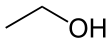
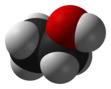
So this isn't the best way to make alcohol I guess but still never the less its alcohol...lets make some. Specifically we will be synthesizing ethanol by fermenting sucrose with the help of some yeast. Ethanol is also known as Absolute alcohol, Alcohol, Drinking alcohol
Ethyl alcohol, Ethyl hydrate, Ethyl hydroxide, Ethylic alcohol, Ethylol, Grain alcohol, Hydroxyethane, Methylcarbino. Go here to learn about ethanol.

General Information:

What we are going to talk about.
C2H22O11 plus H2O breaks into 2 C6H12O6 plus zymase gives us 4 CH3CH2OH (ethanol) + 4 CO2


Place 40 mg sucrose in a 500 mL Erlenmeyer, add 200 mL water and 3.0 g dry yeast. Stire till sugar dissolves and you can't really see the yeast.

Add 35 mL Pasteurs salt - stir to mix. Close the flask with a stopper fitted witha  piece of bent glass tubing.

Fill a test tube halfway with a saturated Ca(OH)2 (also known as limewater) - submerge other end of glass tube into test tube so its about 1 cm below surface of the solution. Store for a week.

After a week come back and filter the solution via vacuum filtration in a 500 mL filter flask. Rinse flask with water. Now take the filtrate in the Erlenmeyer and place in a round bottom flask, add 2 boiling stones and assemble for simple distillation. Set so the Alcohol flows into the recieving flask at 1 drop/sec. Heat till 50 mL are collected.

To find the density of this weight a tared 10.0 mL erlenmeyer, add 10.0 mL of the distillate and mass/volume = density which corresponds with a percent alchol by volume.

Take the sample (all of the simple fractional distilation sample) and prepare for fractional distillation. Use a 100 mL round bottom flask, add some boiling stones. In the Fractional distillation either pour some glass beads or stainless steel sponge. Turn heat to moderate amount and wait.  Collect 3 different samples each called Fraction 1, 2, 3 etc.

Fraction one should be the first 10 mL sample, Fraction 2 is the sample from 78 to 80 degrees Celcius and Fraction 3 is really rubish.

To determine the percent alcohol by volume or by mass use the same technique as above. Take a known volume, find its mass. Mass divided by volume = density. Use tables or online literature valus to find the percent alcohol by volume by the corresponding density. Remember water is more dense than alcohol. Hence water sits below alcohol if you pout them together. Ideally you would want your sample to weigh less.

Questions

What does the density and percent composition results tell you about the relative efficiencies of simple vs. fractional distillation? In other words, the distillation efficiency is higher when the distillate density is _________ and percent ethanol is ______________.

Blank 1) lower Blank 2) higher

Distillate from simple distillation does not have as high of percent alcohol as those of fractional distillation, hence fractional distillation has a higher efficacy. When distillation efficacy is higher the density of the solution is lower and its alcohol content is greater.

2. Which method gives purer ethanol? Briefly explain reasons for the difference in efficiencies of these two distillation methods, assuming no large technical errors were made.

Fractional distillation should result in purer ethanol. The difference is in part due to difference in apparatus, which provides more surface area to allow for cooling and condensation of the sample, the increase in plates and allow to get closer to the azeotrope.

3. How does the recorded temperature relate to the composition of the distillate?

The lower the boiling point of the solution the greater the likelihood that there is more ethanol in the solution. Ethanol has a lower boiling point than water, hence it is more volatile. Temperature and composition are directly related because the boiling point is contingent upon the compsition of the solution and the more volatile substances boil first.


4)What is an "Azeotrope"?
Its where you have liquid and vapor with same boiling point so no more enrichment can occur via distillation.

5) What makes fractional distillatation more efficient that simple distillation in terms of the aparatus. Being that in this case the two liquids have a similar boiling point.

The distillation column makes fractional distillation more efficient. Its filled with glass beads or steel wool. This elongated column allows for more surface area fr vapor to become cool and in liquid form again. Then it heats up again. Allowing for more plates (cycles of warming to vapor and being cooled again).
In each plate (heating till vaporazation till cooling and retuning to liquid form via condensation) in falls down back the fractional distillation tube the percent alcohol actually increases till the azeotrope is reached because both liquids have simlar boiling points they go through the same states.

Check out this image it may help.


Anyways if you are bored and or broke as always go here: