Sunday, November 4, 2012

How to get a dollar sent to your house for free!

Okay so this isn't organic chemistry...but everybody loves cash...right? Right now there an offer where you can get a dollar (US) sent to your place of residence. The instructions go as follows....

Act now before time runs out!!!


 1) sign up at this website.


2) Confirm your email.
3) Go to prizes sections. Specifically the low cost rewards.
4) Order Dollar.
5) Wait
6)Receive and enjoy!

When you sign up they'll give you 250 free points. Which is convenient because the dollar is 100 points and shipping is 144. Aka you get a free dollar. Enjoy!

Just as seen on: http://freecreditsforfacebook.blogspot.com/2012/10/free-dollar-for-united-states-residents.html


Sunday, August 19, 2012

Color and Para Red

In this post I'll talk about a little chemistry regarding color(s) and Synthesis of the Dye Para Red from Aniline

First some info from WIKI:
Para Red (paranitraniline red, Pigment Red 1, C.I. 12070) is a chemical dye. Chemically, the dye is similar to Sudan I. The dye was discovered in 1880 by von Gallois and Ullrich, and was the first azo dye. It dyes cellulose fabrics a brilliant red, but is not very fast. The dye can be washed away easily from cellulose fabrics if not dyed correctly. Throughout making Para Red, the solution will become acidic and basic. Small amounts of byproducts may be left over after the Para Red dye is made that may be acidic or basic, but if made correctly there are little of these and the byproducts have no effect.
In the United Kingdom, the dye is not permitted in food. The UK's Food Standards Agency (FSA) stated that "the Agency’s independent scientific experts have advised that, although there are very limited data available, it would be prudent to assume that it could be a genotoxic carcinogen". [2]
On 21 April 2005, the FSA announced that some batches of Old El Paso dinner kits had been contaminated with the dye, and issued an alert.[2] Also, reported on the 5 May 2005, the dye was found in 35 products which have now been taken off supermarket shelves. The products were mainly cooking sauces, though some are also spices.[3]


At this point I'm going to ask you please please please yo help me out and check out these sites below if you appreciate the help here! 


Procedure
             All procedures were carried out under a hood, all individuals involved wore nitile gloves and safety goggles. Glassware was cleaned, rinsed with deionzed water and if necessary acetone before usage.
            First .7 grams para-Nitroaniline, 15 mL H2O were placed in an Erlenmeyer  flask. The flask was placed onto a hot plate and 3 M HCl was added till everything was completely dissolved. Upon dissolving the solution was cooled in ice water bath (0-5°C) for 10 minutes. Meanwhile a solution of 7 % NaNO2 was prepared by adding .7 grams NaNO2 to 10mL H2O and swirled for 10 minutes with stir bar via the use of the stir function on the hot plate. The heating function was turned off on the hot plate and the solution was kept cool during the period of the stirring.
            Next .7 grams KI were weighed and placed in a beaker. Via the use of a pipette 5.0mL of the cold diazonium salt was added to the KI. The mix was swirled till gas evolution decreased and then ceased. The solid was isolated via vacuum filtration with a Hirsch funnel and washed twice with 1mL portions of cold deizonized water. After filtration the product was isolated and kept for a week allowing it to dry.

            In another 50 mL beaker .25 g b-naphthol and 15mL water were heated till about 60-80°C. Next 10% NaOH was added drop wise will all was dissolved. Meanwhile a notch was cut in the wool portion of the fabric (to help with identification). The fabric was soaked in the solution for about 2 minutes, then removed with forceps and patted dry. The fabric was then placed in the cool diazonium salt.
            Once the fabric was removed the remainder of the b-naphthol was chilled till about 5°C. After cooling the remainders of the 2 solutions were mixed together and via the use of a Buchner funnel underwent vacuum filtration. The collected product was washed thoroughly with water. Once the product was collected it was placed in a beaker and allowed to sit for a week to dry. After the products dried the melting point range was observed and analyzed

For more go here:

https://docs.google.com/viewer?a=v&q=cache:lravLKFHs34J:ochemonline.pbworks.com/f/04_Azo_Dyes.pdf+&hl=en&gl=us&pid=bl&srcid=ADGEESglnTd8VLb0HroH3tQxK2VX1Fqbdyj_WYOKBfIA2Uvw5Gq-VdBtjmuoJJu6eHNr-uqF0-0DssQbyG2VMXEdm2HHPlQKX2Cvoy3MWk5AJZ9mzEiCRfntPakhtnKTtvC8woqy3GdW&sig=AHIEtbSwxqlxEJSBGwZDfD6wYRa-rKJXYg&pli=1

Sunday, June 10, 2012

So you have a chemical unknown...

Feel free to try this out if you have a chemical unknown it might help! Organic Compounds Database

Welcome to the Organic Compounds Database.

This 2483 compound database has been compiled by Harold M. Bell at Virginia Tech. Fill in the form below with as much information as you can. Leave the information blank if you don't know or you don't care. Click on the submit button to execute your search. You will receive at most 20 hits.
Melting Point +-5C________________ Boiling Point +-5C
Index of Refraction, nD20 +-0.005_ Molecular Weight +-2amu
Formula: C H N O Cl Br I S
(for formulas you can enter a ">" or "<" in front of the number, eg. >2)

UV Absorption Wavelengths:

, , +-5 nm

Mass Spectral Peaks:

, , , m/e

Chemical Types:

No Carbonyl present_ Carbonyl present
No Aromatic present_ Aromatic present
No OH or NH present OH or NH present
CH type:
no C-H saturated C-H unsaturated C-H both saturated and unsaturated C-H Compound name contains:
Key to the Literature References
This data is available with 2D-structures and NMR chemical shifts in ISIS/Base format.

Friday, April 27, 2012

Bromination of trans-cinnamic acid


In this lab we'll look at what its like to add bromine to transcinamic acid via adding methods of stereo-chemistry. Additionally we'll take a look at trying to prove the reaction was successful and that we actually did get 2,3-dibromo-3-pheylpropanoic acid.Bromination are a type of Halogenation procedures using bromine, read more about it here.


But first a distraction: Right now there an offer where you can get a dollar (US) sent to your place of residence. The instructions go as follows....

Act now before time runs out!!!


 1) sign up at this website.


2) Confirm your email.
3) Go to prizes sections. Specifically the low cost rewards.
4) Order Dollar.
5) Wait
6)Receive and enjoy!

When you sign up they'll give you 250 free points. Which is convenient because the dollar is 100 points and shipping is 144. Aka you get a free dollar. Enjoy!


And Now BACK TO ORGO!!!!!


 Below is kind of a generalized look at the addition of the Bromine via a Trans Addition, which sorry to spoil the surprise is the way its going to add.


Trans-cinnamic acid (E-3-phenyl-2-propanoic acid) has a molecular weight of 148 g/mol and a melting point of 133 degrees Celsius.

There are several enantiomers of 2,3-dibromo-3-phenylpropanoic acid, they all have a molecular weight of 308 g/mol (Molecular Weight: 307.96662 to be specific).

The (2R, 3S) and (2S, 3R) have a melting point of 202-204 degrees Celsius.

The (2R, 3R) and (2S, 3S) have a melting point of 93.5 to 95 degrees Celsius.


 Things that were done:

150 mg trans-cinnamic acid and .6 mL glacial acetic acid were put acid in a test tube. The tube was put in a 50 degree celcius water bath till all the trans-cinnamic acid dissolves. Next 1.0mL of 1.0M Br2 in acetic solution. the mix was stirred via agitation at 50 degrees Celsius till the color faded from red/brown to light orange and was heated for another 15 minutes. Next a drop of cyclohexane was added. The mix was cooled in ice water bath for 10 minutes (crystals formed). Meanwhile distilled water was cooled (in an ice bath). Note if the crystal didn't form the side would have been scratched with a siring rod and left in the ice water bath for another ten minutes.

The product was collected via vacuum filtration. The crystals were washed with ice water ( note its a good idea to do it till the smell of acetic acid is gone. Next was the process of recrystallization. The sample retrieved from vacuum filtration was placed in .5mL ethanol in an 10mL Erlenmeyer flask. After the sample had dissolved boiling stick was added and the mix was heated via a steam water bath. If the sample doesn't dissolve add more ethanol. Next a volume of water equal to the amount of ethanol was added. The sample was removed from the heat and allowed to cool for 10 minutes in ice. Crystals were removed from the solution via vacuum filtration (note a new clean Hirsch funnel and new filter paper was used)

 Things you may ask...

What is a mixed solvent recrystallization? What is the reason for using mixed solvent recrystallization?

 Mixed solvent recrystalization refers to a process of crystallization used for the purpose of purification. A solvent is added to a mixture with desired and undesired components creating a solution. The solution is heated so that all of its components are able to dissolve, this solvent chosen because of its known properties of solubility. At a higher temperature everything should remain dissolved in the solvent as it becomes supersaturated. However as it cools crystals of your desired compound should form being that at lower temperatures the solvent can no longer remain super saturated, meanwhile impurities and undesired compounds should remain dissolved in the solvent. In this experiment the crystals could be isolated via vacuum filtration.

 Should the product exhibit optical activity?

 No the product would not exhibit optical activity because while each enantiomer is chiral they exist as a racemic mixture such that the specific rotation of one enantionmer would cancel the rotation of the other being that they should have the same magnitude but in the opposite direction.

 What is the mechanism of the addition like?


It can happen via Radicals
What can the melting point/range say about the purity of the sample?

 If the observed melting point or range is near the reported melting range from the literature it suggests that  the product is that of the enantiomer set. For this particular experiment the  (2R,3S) and (2S, 3R) enantiomers of 2,3-dibromo-3-phenylproanoic acid are expected. Indicating that the bromine addition occurred via an anti method. Had bromine of added via syn addition the melting point would have been near 95 °C (provided in the literature).  The difference of several degrees between the literature and the experimental values may be the result of impurities and the possible existence of other enantiomers or compounds in the product. Recall that impurities cause depression and extend the range of the melting points.


Tuesday, April 17, 2012

Fun?

Please excuse the dorkish moments...

Meet Metta World Peace formerly known as Ron Artest.


 Shall we go to Paradise?

 Because ortho sounds like some root word related to bones, here is another one.


Some more attempts at funny.


Sunday, April 15, 2012

Limonene

Limonene exists in R-(+) and S-(-) formations. Both have a boiling point of 175.5-176 degrees Celsius, both have a molecular weight of 136.2 grams per mol but they differ in their optical rotation. 

R-(+) has a density of about .8402 g/mL and an optical rotation of 125.6 degrees (note the positive number) while the S-(-) has a density of .8407g/mL and an observed optical rotation of -122.1 degrees (note the negative number)

In this lab we'll talk about Isolating the R-(+) formation of Limonene from orange peels. Note the R-(-) can be found in Caraway seeds.

How you do it?
Take the oranges and peel them. It's best to do this right away to prevent the loss of limonene. Try to remove the white pulp from the peel.

In a blender add the peels and 200- 250 mL of water. After blending put in a 500 mL round bottom flask. Add 4 drops of anti foaming agent...or don't if you would like to have a "fun time". With a Claisen adapter prepare for steam distillation with a 50 mL round bottom flask as the receiver. Marking the 50 mL round bottom flask at the 35 mL level will be helpful so pour some water in it, mark it, empty it and voila.

Boil the mix without letting any solid material bump over into the condenser. Collect 35 mL of the distillate. Note if you use a heating mantel a variac will probably be a good idea as to add an element of control. Also it will prevent the mantel from heating up to quickly/getting to hot and in the process you may actually end up burning your orange peels. Burning the orange peels may result in bad results and a load of gunk that accumulates on the bottom of the round bottom flask which take my word will be annoying and nasty to clean up however a bit of acetone, some soap and some time will help you eventually make it clean again. Also the burned peels may affect your observed optical rotation adding an element of impurity to the sample.

Pour the distillate into a separatory funnel (125 mL size should do). Add 5 g sodium chloride and shake. Next add 10 mL dichloromethane via a conical funnel through the top of the separatory funnel. Gently shake the mix and allow for pressure to be release by opening the stop cock every so often. Let the mix sit and the layers to separate. Make sure the stop cock is closed during this process and the stopper is held is place or else by by sample.
Collect the bottom layer (the organic bottom layer and the top is the top aqueous layer) in a flask. Repeat the extraction with 15mL dichloromethane (fresh) every time. Next dry the extracted solution with anhydrous magnesium sulfide for 10 min.
Meanwhile weight and clean an Erlenmeyer flask for later use. Into this Erlenmeyer with the use of a conical funnel fitted with filter paper and pour the solution. This should take out the anhydrous magnesium sulfide.

Then by any means you want be it nitrogen gas, hot water bath or just allowing it to sit allow the dichloromethane to evaporate.

To do polarimetry (link should take you to wikipedia) obtain 10mL of 95% ethanol. Dissolve Limonene in 3 mL of the ethanol via Pasteur pipette. Transfer to a 10mL volumetric flask and do polarimetry on it. Note calculate the polarimeter with the 95% ethanol as the reference solution. The rotation should tell you about entantiomeric excess if applicable.


Questions:

 What is a steam distillation?  Why is it useful in this isolation experiment?

            Steam distillation is a form of distillation often used to distill heterogeneous mixtures. It allows for the adding of pressures of components in the mixture to overcome that of the atmosphere and boil. This typically results in lower temperatures till boiling is reached especially so when compared to a solution that follows Raoults Law.

            Steam distillation is useful in this experiment because it lowers the temperature necessary to give rise to the boiling of limonene. Typically to achieve this point the boiling point would be so high the orange peels would burn and the charring would contaminate the isolated limonene. The H20 and limonene pressures combine give rise to the lowered boiling point. It’s also possible that higher temperatures would result in decomposition of limonene.

 What was the purpose of the extracting of our collected distillate with dichloromethane and salt-water?

            The salt in the salt water allows for more transfer of limonene to the organic layer. The salt is absorbed in the water and saturates it decreasing the total possible amount of limonene that can be absorbed by the water. Similar to a process called "salting out".
            If the dichloromethane was used for extraction the Limonene would have been found in this layer. Because dichloromethane is more dense than water and they do not mix the dichloromethane would have formed a visible layer below the water that could be taken out by opening the stop cock of the separatory funnel and allowing the bottom layer to be collected.

How do I find the specific rotation?

specific rotation = observed rotation                                                                       
                               (density in g/mL) x length of polarimeter tube in decimeters

Or in words its the observed rotation divided by the product of the density (aka concentration) and the length of polarimeter tube in decimeters.

What happens if you shake too vigorously during the extraction with dichloromethane?

The gas could explode due to the build up of pressure inside of the separatory funnel. Also you may mix the layers so well that it won't separate as quickly.


On the other hand what happens if you don't shake vigorously enough?
The layers may not separate and limonene may not separate from the aqueous layer and go into the dichloromethane layer.

As always I don't get paid for this so if you can please join below I really appreciate it.

Friday, April 13, 2012

Alcohol...lets make some.

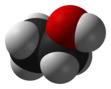
So this isn't the best way to make alcohol I guess but still never the less its alcohol...lets make some. Specifically we will be synthesizing ethanol by fermenting sucrose with the help of some yeast. Ethanol is also known as Absolute alcohol, Alcohol, Drinking alcohol
Ethyl alcohol, Ethyl hydrate, Ethyl hydroxide, Ethylic alcohol, Ethylol, Grain alcohol, Hydroxyethane, Methylcarbino. Go here to learn about ethanol.

General Information:

What we are going to talk about.
C2H22O11 plus H2O breaks into 2 C6H12O6 plus zymase gives us 4 CH3CH2OH (ethanol) + 4 CO2


Place 40 mg sucrose in a 500 mL Erlenmeyer, add 200 mL water and 3.0 g dry yeast. Stire till sugar dissolves and you can't really see the yeast.

Add 35 mL Pasteurs salt - stir to mix. Close the flask with a stopper fitted witha  piece of bent glass tubing.

Fill a test tube halfway with a saturated Ca(OH)2 (also known as limewater) - submerge other end of glass tube into test tube so its about 1 cm below surface of the solution. Store for a week.

After a week come back and filter the solution via vacuum filtration in a 500 mL filter flask. Rinse flask with water. Now take the filtrate in the Erlenmeyer and place in a round bottom flask, add 2 boiling stones and assemble for simple distillation. Set so the Alcohol flows into the recieving flask at 1 drop/sec. Heat till 50 mL are collected.

To find the density of this weight a tared 10.0 mL erlenmeyer, add 10.0 mL of the distillate and mass/volume = density which corresponds with a percent alchol by volume.

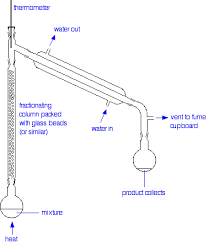
Take the sample (all of the simple fractional distilation sample) and prepare for fractional distillation. Use a 100 mL round bottom flask, add some boiling stones. In the Fractional distillation either pour some glass beads or stainless steel sponge. Turn heat to moderate amount and wait.  Collect 3 different samples each called Fraction 1, 2, 3 etc.
Fraction one should be the first 10 mL sample, Fraction 2 is the sample from 78 to 80 degrees Celcius and Fraction 3 is really rubish.

To determine the percent alcohol by volume or by mass use the same technique as above. Take a known volume, find its mass. Mass divided by volume = density. Use tables or online literature valus to find the percent alcohol by volume by the corresponding density. Remember water is more dense than alcohol. Hence water sits below alcohol if you pout them together. Ideally you would want your sample to weigh less.

Questions

What does the density and percent composition results tell you about the relative efficiencies of simple vs. fractional distillation? In other words, the distillation efficiency is higher when the distillate density is _________ and percent ethanol is ______________.

Blank 1) lower Blank 2) higher

Distillate from simple distillation does not have as high of percent alcohol as those of fractional distillation, hence fractional distillation has a higher efficacy. When distillation efficacy is higher the density of the solution is lower and its alcohol content is greater.

2. Which method gives purer ethanol? Briefly explain reasons for the difference in efficiencies of these two distillation methods, assuming no large technical errors were made.

Fractional distillation should result in purer ethanol. The difference is in part due to difference in apparatus, which provides more surface area to allow for cooling and condensation of the sample, the increase in plates and allow to get closer to the azeotrope.

3. How does the recorded temperature relate to the composition of the distillate?

The lower the boiling point of the solution the greater the likelihood that there is more ethanol in the solution. Ethanol has a lower boiling point than water, hence it is more volatile. Temperature and composition are directly related because the boiling point is contingent upon the compsition of the solution and the more volatile substances boil first.


4)What is an "Azeotrope"?
Its where you have liquid and vapor with same boiling point so no more enrichment can occur via distillation.

5) What makes fractional distillatation more efficient that simple distillation in terms of the aparatus. Being that in this case the two liquids have a similar boiling point.

The distillation column makes fractional distillation more efficient. Its filled with glass beads or steel wool. This elongated column allows for more surface area fr vapor to become cool and in liquid form again. Then it heats up again. Allowing for more plates (cycles of warming to vapor and being cooled again).
In each plate (heating till vaporazation till cooling and retuning to liquid form via condensation) in falls down back the fractional distillation tube the percent alcohol actually increases till the azeotrope is reached because both liquids have simlar boiling points they go through the same states.

Check out this image it may help.


Anyways if you are bored and or broke as always go here:

Friday, March 23, 2012

Inspiration and more

Inspiration, never a bad thing. Street art a good distraction here you go. Together inspiration and street art (aka graffiti) make for an interesting combo.

 "You're never too young to dream big". Meaning you're never to small to dream big. If it matters my dream is to finally understand these damn organic chemistry labs. #sarcasm?
This was found outside Santa Monica College March 20, 2012 it may or may not be a Banksy.


Different inspiration. Study your organic chem or else you may have to resort to this. #haha?

Last but not least lets throw in Banksy (assuming the first one isn't Banksy). If organic chem fails go out with a bang like the crayola shooter. This one was found in Westwood, California near UCLA in February of 2011 behind an urban outfitters.


Now back to studying.


And always if you're bored or broke check this out:

Synthesis of Salicylic Acid

So we meet again. In the event you find this near sunrise filled with anxiety, rage and confusion I hope this gives you a hand.

Purpose:
  The purpose of this experiment was to perform a base-catalyzed hydrolysis reaction while converting oil of wintergreen to salicylic acid. The full balanced molecular equation for the salicylic acid synthesis is C8H8O3 + 2 NaOH + H2SO4  -> C4H6O3 + Na2SO4 + CH3OH + H2O. An illustrated equation showing compounds to be isolated or synthesized is shown below.


Procedure
             All procedures were carried out under a hood, all individuals involved wore nitrile gloves and safety goggles. Glassware was cleaned, rinsed with deionzed water and if necessary acetone before usage. Remember...be safe.
            First 3.5 mL of water were poured into a 50mL round bottom flask. Next .448 g Sodium Hydroxide (NaOH), which happened to be in pellet form, was then weighed out using a weigh boat and was added to the water, which was then swirled until the solid dissolved.  The pellet form of the NaOH made it difficult to acquire the .48 grams indicated by the manual. After the pellets dissolved .23 mL of Methyl salicylate (measured with a graduated pipette) was added to the NaOH solution. A boiling stone was then dropped to the bottom of the round bottom flask.
            Next, using grease on the glass joint, a water jacketed condenser was added to the round bottom flask. They were connected and held in place by a screw cap at the joint of intersection between the two. Two water tubes were attached to the condenser, the top arm attached to a tube allowing for water to go out, the bottom arm of the condenser was connected to a tube lead from the water source in the hood, allowing for the water to come in and run through. A clamp was used to hold the apparatus steady and hold fast to a vertical rod in the hood. The round bottom flask was kept in place by an aluminum block, placed on a heating plate, which was turned on to about 1/3 of its maximum power. The mixture was heated for about 15 minutes as the white solid dissolved.
            After reflux, the equipment was allowed to cool to room temperature by separating it from the heat source, it sat till it was only slightly warm and comfortable to handle. The condenser was removed. Next, 3M Sulfuric Acid (H2SO4) was added in .5mL increments till a white precipitate formed and stayed as the solution continued to be stored.  An additional .5mL were added to allow completion of the precipitation reaction.

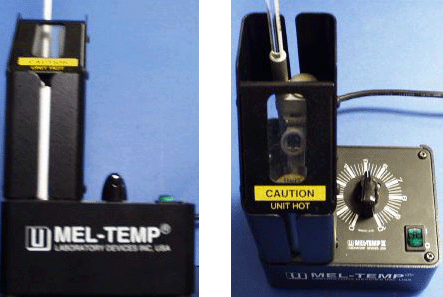
            The contents of the round bottom flask then underwent vacuum filtration through a Hirsch Funnel fit with filter paper and connected with an integral adapter to a 25mL filter flask. The crude product from the Hirsch funnel was then transferred to weigh paper using a spatula. The salicylic acid crystals were then placed in a 10mL Erlenmeyer flask. Next, 5mL of water were added to the Erlenmeyer flask containing the crystals. The solution was put on the hot plate till the solid dissolved and was immediately taken off.  The flask and its contents were allowed to sit at room temperature while crystallization occurred. The crystals were collected via a second filtration using a Hirsch funnel with the same set up as the one done earlier in the experiment. Upon completion of the filtration the crystals were placed in an empty vial and stored for a week. The following week the crystals were packed into a capillary tube with only one open side. The sample was placed in apparatus, Mel Temp, that provided a magnified view of the sample and temperature, allowing for the assessment of the samples melting point and range. Another sample was prepared with acetone with deutero Hydrogen by an instructor. This sample underwent C-13 Nuclear Magnetic Resonance Spectroscopy (C-13 NMR). Samples from multiple lab groups ran through the machine, the goal was to learn how the C-13 NMR helps determine molecular structure, and look at the induced magnetic field.


Things that are good to know for this lab:


For Reference:       C8H8O3 + 2 NaOH + H2SO4  -> C4H6O3 + Na2SO4 + CH3OH + H2O.


Finding the limiting reagent (plug and chug)

Note: There is a 1:2 molar ratio of Methyl salicylate (C8H8O3) to Sodium Hydroxide, respectively. Note, Methyl salicylate is the limiting reagent; this will be used to calculate the theoretical yield.

_____ g NaOH x      1 mole      = ____moles NaOH x 1 mole Methylsalicylate  = .____ moles Methyl Salicylate needed
                           39.99 grams                                              2 moles NaOH

___ g Methyl Salicylate x 1 mole   = ____ moles Methyl Salicylate x 2 moles NaOH     = ____ moles NaOH needed
                                     152 grams                                                 1 mole Methyl salicylate

Theoretical Yield: Referring to the balanced molecular equation there is a 1:1 molar ratio                                        between Methyl Salicylate and the Salicylic Acid.

___ moles Methyl Salicylate x   1 mole Salicylic Acid = ____ moles Salicylic acid expected
                                                  1 mole Methyl Salicylate

____ moles Salicylic Acid expected x       138 grams       =    ____ grams Salicylic Acid expected
                                                              1 mole Salicylic Acid

Questions?

After NMR give two pieces of evidence that salicylic acid was the solid produced by reacting methyl salicylate with the aqueous base. Which piece of evidence gives the direct structural information? Which gives only indirect evidence?

C13 NMR of methyl salicylate has 8 unique carbon peaks, while salicylic acid has 7. The C that is lost was bonded to 2 Oxygen molecules making it down stream whihc is congruent with the chemical equaiton. C13 NMR gives indirect structural information.

Measuring the melting point and range allows you to compare it to the known melting point of salicylic acid telling you if the compound has the same melting point and if it has impurities. Impurities cause a depression and increase in range. The larger the range the more impurities it has.  Measuring the melting point gives direct information.

Why is it that dilute sulfuric acid does not allow the reaction to proceed while concentrated sulfuric acid does?

Sulfuric Acid is used as a reaction catalyst. This means that you need to overcome an activation energy to create the product. The dilute sulfuric acid does not have as fast and as high dissociation as the higher concentration sulfuric acid, thus the reaction does not finalize because it does not overcome the energy of activation.

On the other hand....

What is the purpose of adding concentrated sulfuric acid in the preparation of methyl salicylate?

Sulfuric acid is used in esterfication reactions as a catalyst.

When methyl salicylate is prepared from salicylic acid and methanol, an OH- is the leaving group from the salicylic acid. The presence of the acid provides a large amount of H+ ions to stabilize the leaving group to H2O, and speeds up the rate of the reaction.

What are  the structures of each of the following compounds

i)-The organic species present immediately after methyl salicylate is first added to the aqueous sodium hydroxide solution and before heating.  
ii)-The organic species present at the end of the reflux period just before the sulfuric acid is added.  iii)-The organic compound present after the sulfuric acid is added.
 Label each  as being soluble or insoluble in water at room temperature.


The Methyl Salicylate is the option "i"it is insoluble in water at room temperature.
The image shown after adding NaOH but before H2SO4 is the organic species present at the end of the reflux period it is soluble in H2O. Salicylic acid, the product is not soluble in water (H2O) during room temperature.

What are the relative chemical shifts in parts per million and their assignment on the Salicylic Acid molecule for C-13 NMR.

Remember C-13 NMR looks at unique carbons. For more on C-13 NMR click here.
 
Peak, δ, ppm
Assignment
112.3
A
117.3
B
119.1
C
130.4
D
136.0
E
162.1
F
171.6
G


Bored? Broke? Try this....
I don't get paid for this so it really helps if you join...plus you get free stuff. If you live in the united states you can get a dollar sent to your house off the bat for free.